


How to Choose a Reliable Bathroom Renovation Company2nd November, 2026|
How to choose a reliable bathroom renovation company? Choosing a reliable bathroom renovation company is about much more than finding someone who can install a beautiful shower, lay tiles or fit a stylish vanity unit. You’re trusting a team to work in your home, manage multiple trades, coordinate deliveries and deliver a bathroom that looks good and functions properly for years to come.
Choose the right company, and the process can be straightforward and rewarding. Choose the wrong one, and you could face unexpected costs, missed deadlines, poor workmanship or disputes over what was agreed.
So, how do you choose a reliable bathroom renovation company?
Start by looking beyond the price. Check the company’s experience, read independent reviews, compare written quotations, understand the contract and establish exactly what happens if something goes wrong.
In this guide, we’ll explain what to look for, which questions to ask, how to compare bathroom renovation quotes and which warning signs to watch for before committing to a contractor.
1. Look for relevant experience, not just impressive photographs
A portfolio of beautiful bathrooms is a good starting point, but photographs alone don’t tell you everything about a company’s workmanship or project management.
A reliable bathroom renovation company should have experience with projects similar to yours and be able to explain how it approaches the practical challenges involved.
For example, renovating a compact bathroom in an older property can present different challenges from fitting out a spacious ensuite in a new-build home. Existing pipework, uneven walls, damaged flooring, ventilation and hidden water damage may all affect the work required.
Look for evidence that the company understands these challenges and can manage them professionally.
What should you look for?
- Relevant experience: Has the company completed bathrooms of a similar size, style and complexity?
- Quality of workmanship: Examine tiled surfaces, shower detailing and the fit of cabinets and sanitaryware.
- Technical knowledge: Can the team explain its approach to waterproofing, plumbing, drainage and ventilation?
- Consistency: Do multiple projects demonstrate a good standard of work?
- Project management: Can the company explain how it coordinates trades, deliveries and installation from start to finish?
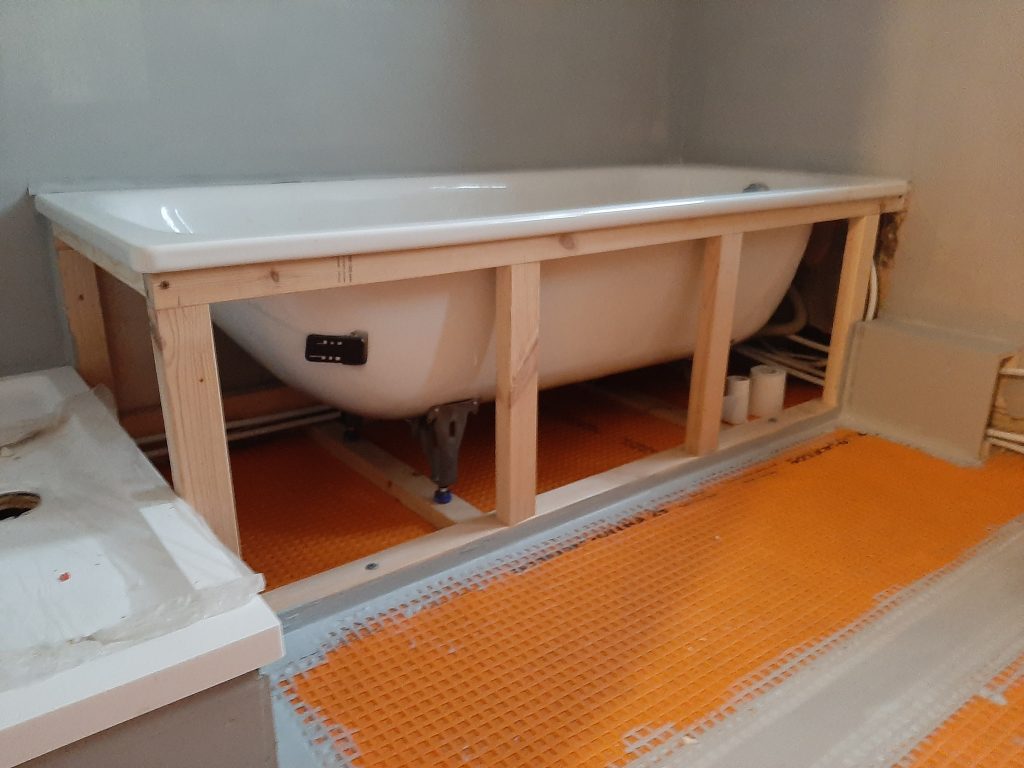
Ask to see photographs of completed projects and, where possible, images showing the installation process. Preparation and technical details can reveal more about workmanship than a finished bathroom photograph alone.
If you’re considering a design-and-install service, ask who will be responsible for each stage and whether the company manages all the trades involved.
Want to see what goes into a successful bathroom renovation? Explore our bathroom renovation projects to see the transformation from the original space to the finished result, including the work involved and the details that make a difference.
2. Check reviews, references and professional credentials
Customer reviews can help you understand how a bathroom renovation company operates, but don’t rely on its overall star rating alone.
Read the detail. Are customers praising communication, punctuality, cleanliness and aftercare, as well as the finished bathroom? Do several reviews mention the same strengths? If negative reviews exist, consider how the company responded and whether it attempted to resolve the issue constructively.
You should also establish that the business is genuine and that its claims can be verified.
Before appointing a contractor, check:
- Recent customer feedback: Look across independent review platforms and the company’s own website.
- Business identity: Confirm the trading name, contact details and the identity of the business entering into your agreement.
- Insurance: Ask for evidence of appropriate insurance, including public liability insurance and employers’ liability insurance where applicable.
- Qualifications and registrations: Check the credentials required for specialist work.
- Trade memberships: Verify what a membership or accreditation covers rather than assuming it guarantees workmanship.
Bathroom renovations can involve plumbing, electrical work and, occasionally, gas work.
Electrical installations must comply with applicable safety requirements, and some work is subject to specific notification and certification rules. Ask who will carry out the work and what documentation you will receive. Where gas work is involved, check that the engineer is appropriately registered with Gas Safe.
A professional-looking website is useful, but verifiable evidence of experience, qualifications and reliable customer service is much more persuasive.
3. Ask these questions before hiring a bathroom renovation company
The initial consultation is your opportunity to understand how a company operates, not simply to discuss tiles, taps and shower screens.
A reliable contractor should listen to your requirements, explain the practical options and answer your questions without making you feel rushed.
Use these questions when comparing potential companies.
Experience and previous work
- Have you completed bathrooms similar to mine?
- Can I see examples of comparable projects?
- Can you provide references from previous customers?
Project management
- Who will manage my renovation day to day?
- Will you use subcontractors, and who is responsible for their work?
- Who will be my main point of contact?
- How will you keep me informed about progress and delays?
Workmanship and technical details
- How will you prepare and waterproof the shower and other wet areas?
- Who will carry out the plumbing and electrical work?
- How will the work be tested before handover?
- What happens if you discover hidden damage or problems with existing pipework?
Costs and timescales
- What exactly is included in the quotation?
- Which products and materials are specified?
- What is excluded, and what could cost extra?
- How long is the renovation expected to take?
- How will additional work be priced and approved?
Guarantees and aftercare
- What insurance do you hold?
- What does your workmanship guarantee cover?
- Which product warranties will I receive?
- Who do I contact if a leak, defect or other problem develops after completion?
Pay attention to the quality of the answers.
A contractor who can explain how a shower area will be prepared, which waterproofing system will be used and how the installation will be checked gives you something concrete to assess.
By contrast, vague assurances such as “we always do a good job” offer little evidence of the standards you can expect.
You don’t need to be a building expert to choose a reliable company. You do need a contractor who can explain the process, identify potential complications and tell you how they will manage them.
4. Compare bathroom renovation quotes properly
Price is an important consideration, but the cheapest quotation isn’t necessarily the best value. Equally, a more expensive quote doesn’t automatically guarantee better workmanship.
The most effective way to compare bathroom renovation companies is to obtain written quotations based on the same project brief.
Where practical, aim to get at least three quotes. Give each company the same information about your preferred layout, fixtures, finishes and required work so that you can compare the proposals fairly.
What should a bathroom renovation quote include?
A detailed quotation should explain the agreed scope of work and identify what is and isn’t included.
Check for the following:
- Labour: Removal of the existing bathroom, preparation, installation, plumbing, tiling, decorating and finishing.
- Materials and products: Sanitaryware, taps, tiles, grout, adhesives, waterproofing materials, pipework and other specified components.
- Waste removal: Disposal of the old bathroom, packaging and building waste.
- Electrical work: Lighting, extractor fans, electric showers and applicable certification.
- Preparation and repairs: Any known work required to address damaged plaster, flooring or existing pipework.
- Project management: Responsibility for coordinating trades, deliveries, access and the order of work.
- Exclusions: Items you must purchase, arrange or pay for separately.
- Price and VAT: The total price, whether VAT is included where applicable, and the quotation’s validity period.
- Payment schedule: Any deposit, staged payments and final balance.
- Timescale: The anticipated programme and how changes or delays will be communicated.
If a quotation simply says “full bathroom renovation” followed by a single figure, ask for a more detailed breakdown before proceeding.
Why do bathroom renovation quotes vary so much?
Different prices can reflect differences in labour, product specifications, preparation, project management, overheads and the amount of work included.
Consider these three hypothetical quotations.
The figures below are illustrative examples, not current market prices or estimates of what your bathroom should cost.
Quote A: £5,500
The quotation includes labour and basic installation, but excludes tiles, sanitaryware, waste disposal and some preparation work.
Quote B: £7,200
The quotation includes labour, specified products, tiling, plumbing, waste removal and a defined installation schedule.
Quote C: £8,000
The quotation covers similar work to Quote B but specifies more expensive products and a longer workmanship guarantee.
At first glance, Quote A appears to save £1,700 compared with Quote B. However, once the excluded items are added, the final cost could be higher.
Quote C might offer better value for some homeowners, but only if the additional products and guarantee justify the price difference.
The important point is to compare what each company will actually deliver, not just the headline figure.
What should you do if one quote is much cheaper than the others?
Ask the contractor to explain the difference.
There may be a legitimate reason, such as a simpler installation, lower product costs or a different approach to the work. However, an unusually low quotation may also indicate omitted tasks, lower-specification materials or assumptions that could lead to additional charges later.
Don’t assume the worst, but don’t accept the price without understanding it.
What’s the difference between a quote and an estimate?
A quotation generally sets out an agreed price for specified work, while an estimate gives an indication of the expected cost.
The legal effect depends on the terms of the agreement and the circumstances. An agreed price may change where additional work is requested or authorised, or where the contract allows for other adjustments.
Before proceeding, ask whether the price is fixed for the stated scope, what assumptions it relies on and how additional costs will be handled.
Our advice: Request a detailed written quotation and agree that additional chargeable work must be explained and authorised before it proceeds, subject to any genuinely urgent action needed to prevent immediate harm or damage.
5. Understand the quotation before work begins
A quotation helps protect both you and your contractor by recording what has been agreed.
Even when you have a detailed quotation and a good relationship with the company, misunderstandings can arise. An agreed quotation gives both parties a clear reference point if questions develop during the renovation.
Always make sure the quotation covers:
- Full business name and contact details.
- Detailed scope of work and product specifications.
- Total price and VAT position where applicable.
- Payment schedule and deposit arrangements.
- Responsibilities for materials, deliveries and waste removal.
- Details of subcontractors and who manages them.
- The process for variations, additional work and extra costs.
- Relevant insurance and compliance responsibilities.
- Workmanship guarantees, product warranties and aftercare.
- Cancellation terms, complaints procedures and dispute resolution.
Agree how unexpected problems will be handled
Bathroom renovations can uncover problems once old fittings, flooring or wall coverings have been removed. These may include hidden leaks, damaged floorboards or unsuitable existing pipework.
A reliable company should explain how it will deal with such discoveries before work begins. Ask the contractor to document the problem, explain the available solutions and provide the cost and timescale implications before proceeding with additional chargeable work.
Your agreement should set out how approval will be obtained and how any necessary urgent action will be managed. This helps you retain control of your budget and reduces the risk of disagreements.
Agree on the programme and disruption
Ask how long the bathroom is expected to be out of use, what working hours to expect and how the team will protect the rest of your home. If you have only one bathroom, children, accessibility requirements or other practical constraints, raise these before signing.
The programme should be realistic and explain how delays, product availability and unforeseen problems will be communicated.
6. Check the workmanship guarantee and product warranties
A new bathroom should give you confidence long after the installation team has left. Before appointing a company, understand what protection you’ll have if something goes wrong.
A workmanship guarantee and a manufacturer’s product warranty are different things.
What does a workmanship guarantee cover?
A workmanship guarantee relates to specified aspects of the installation, subject to its terms.
Ask how long it lasts, which elements are covered, what exclusions apply and how faults will be assessed and corrected.
For example, establish how the company would deal with an installation-related leak, defective tiling or failed seals.
Don’t assume that every guarantee covers every fault or that all guarantees offer the same protection.
What does a manufacturer’s warranty cover?
A manufacturer’s warranty applies to a particular product, such as a tap, shower valve, sanitaryware item or electric shower.
Check the warranty period, exclusions, registration requirements and whether labour costs are covered if a product develops a fault.
Keep copies of the relevant warranty information and proof of purchase.
Questions to ask about bathroom guarantees
- How long does the workmanship guarantee last?
- What installation defects are covered?
- Who pays for labour and materials if a covered fault develops?
- How do I report a problem, and what response should I expect?
- What happens if the company stops trading?
- Are product warranties provided separately by the manufacturers?
7. What Should You Expect From a Renovation Company That Gets Every Detail Right?
A bathroom’s quality isn’t determined by its appearance alone. Important work takes place behind tiles, beneath flooring and inside walls.
Poor preparation, inadequate waterproofing or badly planned drainage can lead to leaks, damage and expensive remedial work. A reliable contractor should be able to explain how it will approach the installation and what checks will be completed before handover.
What does good bathroom renovation workmanship look like?
Preparation before installation
The existing bathroom should be removed carefully, and the condition of relevant substrates, flooring and pipework should be assessed before new finishes are installed.
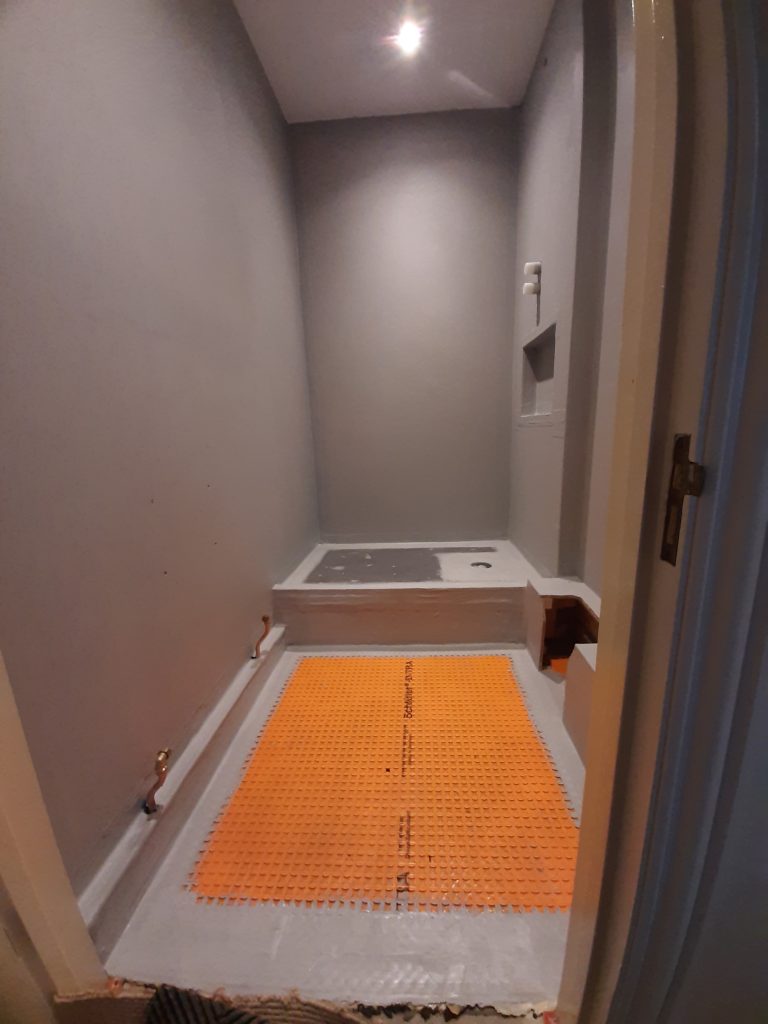
Appropriate waterproofing
The contractor should explain how wet areas will be protected, including the preparation methods and products appropriate to the chosen system.
Correct plumbing and drainage
Water connections, waste pipes and shower drainage should be planned and installed to suit the layout and applicable requirements.
Safe electrical installation
Lighting, ventilation, electric showers and other electrical equipment must be suitable for their location and installed in accordance with applicable requirements. For further information, browse the relevant UK electrical safety and Building Regulations requirements
Quality finishing
Look for consistent tile alignment, neat grout and silicone joints, secure fittings and well-finished details around basins, baths and shower screens.
Testing and handover
Before completion, the team should check the operation of taps, showers, drainage, ventilation and relevant electrical installations. Applicable certificates, product information and care instructions should be provided.
You don’t need to specify every technical detail yourself. You do need a contractor who takes these elements seriously and can explain how the work will be completed.
Bathroom waterproofing
8. Understand deposits and payment schedules
A sensible payment arrangement helps both the homeowner and the contractor manage the financial side of the project.
Before signing, establish:
- Whether a deposit is required and what it covers.
- When subsequent payments will become due.
- Whether payments are linked to defined stages of work.
- What amount remains payable at completion.
- How invoices and receipts will be provided.
Avoid paying the entire renovation cost upfront without a clear, justified contractual arrangement and appropriate protection.
A staged schedule might link payments to agreed milestones, such as preparation and first-fix work, installation and tiling, and final completion. The appropriate arrangement will depend on the project, materials commitments and contract.
If a contractor requests a substantial advance payment, ask why it is needed and what protection is available for your money.
9. Recognise the warning signs of an unreliable bathroom fitter
An attractive website and a competitive price don’t necessarily indicate that a contractor will deliver a reliable service.
Certain behaviours should prompt further questions or make you reconsider your options.
Unusually cheap quotations
A price significantly below comparable quotations may indicate missing work, lower-specification products or unrealistic assumptions. Ask for a breakdown and compare the complete scope.
Refusal to put agreements in writing
Be cautious if a company refuses to provide a detailed quotation, written terms or a clear process for approving additional work.
Pressure to pay upfront
Be wary of demands for the entire project cost before work begins, unexplained large deposits or pressure to transfer money immediately.
Poor communication
Repeatedly missed appointments, unanswered questions and contradictory information can indicate problems with organisation or customer service.
No verifiable references or appropriate insurance
If a contractor cannot provide credible evidence of previous work or confirm the relevant insurance arrangements, take time to assess whether the company is suitable.
Unclear explanations of extra costs
Be cautious if the contractor repeatedly changes the price without a clear explanation or pressures you to approve additional work without supporting information.
A single warning sign doesn’t automatically mean a company is untrustworthy. What matters is whether concerns are addressed clearly and supported by credible evidence.
If your doubts remain unresolved, it may be wiser to consider another contractor.
10. Should you choose a bathroom specialist or a general builder?
The right contractor depends on the scope and complexity of your project. But how do you choose a bathroom renovation company that has the right experience and expertise for your needs?
A straightforward replacement of a bath, basin and toilet may suit an experienced bathroom fitter. A renovation involving layout changes, structural alterations or extensive work across several rooms may require broader building expertise.
Here’s how the options compare.
Bathroom renovation specialist
Often suitable for full bathroom renovations involving coordinated trades, design choices and installation. Check whether the company manages the complete project or only fits the bathroom suite.
Independent bathroom fitter
May be well suited to smaller upgrades and installations within their area of expertise. You may need to arrange additional trades yourself.
General builder
Can be a suitable choice for projects involving structural changes or wider building work. Confirm their experience with bathroom-specific installations and wet-area detailing.
Separate tradespeople
May offer flexibility if you’re comfortable coordinating the schedule, materials and responsibilities yourself. However, you’ll need to manage communication and resolve any uncertainty about who is accountable for particular tasks. The label matters less than the actual service provided.
For many homeowners, a clearly defined, managed renovation service can reduce the burden of coordinating multiple trades. However, this is only an advantage if responsibilities, costs and standards are properly documented. Compare the service you will receive rather than assuming that one type of contractor is always better than another.
11. How do you know you’ve found the right bathroom renovation company?
The strongest candidate isn’t necessarily the company with the glossiest brochure, the longest list of services or the lowest price.
Look for a combination of evidence, transparency and confidence.
They listen. They understand how you want to use your bathroom and what matters most to you.
They advise honestly. They explain practical limitations, potential risks and alternative solutions.
They are transparent. They provide a clear specification, realistic costs and an understandable payment schedule.
They demonstrate experience. They can show comparable projects and provide credible references.
They communicate well. They respond to questions and explain who will be responsible for your renovation.
They stand behind their work. Their workmanship guarantee and aftercare arrangements are clearly documented.
They respect your home. They explain how access, dust, waste, cleanliness and disruption will be managed.
Trust your judgement, but support it with evidence. A contractor who is easy to talk to is a good start. A contractor whose claims you can verify is a much stronger choice.
Your final checklist before choosing a bathroom renovation company
Before accepting a quotation, work through this checklist.
- I’ve checked recent reviews and spoken to references where possible.
- I’ve seen examples of comparable completed bathrooms.
- I’ve verified the business identity and relevant insurance.
- I know who will carry out the plumbing, electrical and specialist work.
- I’ve compared at least three quotations where practical.
- I understand what’s included, excluded and potentially chargeable.
- I have a written agreement covering the scope, price and timescale.
- I understand the payment schedule and deposit arrangements.
- I know what the workmanship guarantee and product warranties cover.
- I understand how changes, delays and unforeseen problems will be handled.
- I know who to contact if a problem arises after completion.
If you cannot tick every box yet, don’t feel pressured to make a decision. Ask for the missing information or take time to compare another company. A reputable contractor should understand why you want to make an informed choice.
Read the guidance: Advice on hiring a reliable contractor
Frequently asked questions
How many quotes should I get for a bathroom renovation?
Aim to obtain at least three written quotations, where practical. Give each contractor the same project brief and compare the scope of work, specified products, exclusions, payment terms and expected completion time rather than focusing on the final price alone.
Should I always choose the cheapest bathroom renovation company?
No. A cheaper quote may exclude important work or specify different products. Ask contractors to explain significant price differences and compare the complete scope, experience, contract terms and aftercare before deciding which proposal offers the best value.
How long should a bathroom renovation take?
The timescale depends on the room’s size, the complexity of the work, product availability and whether hidden problems are discovered. Ask for a project-specific programme covering preparation, installation, finishing and testing, together with an explanation of how delays will be managed.
What should a bathroom renovation quotation include?
A quotation should clearly describe the agreed work, labour, specified products, waste removal, preparation, exclusions, total price, VAT position where applicable, payment schedule and anticipated timescale. It should also explain how unforeseen problems and additional work will be priced and approved.
Is a written contract necessary for a bathroom renovation?
A written contract supported by a detailed quotation is strongly recommended. It records the agreed scope, costs, timescales, payment arrangements and responsibilities, providing a useful reference if a disagreement arises. Although verbal agreements can be legally binding, proving their precise terms may be more difficult.
What guarantee should a bathroom renovation company offer?
There is no single workmanship guarantee that applies to every bathroom renovation. Ask for the company’s terms in writing, including the duration, coverage, exclusions and process for reporting faults. Check product warranties separately and remember that applicable statutory rights may also protect you.
Should I pay a deposit before work starts?
Some contractors request an initial payment towards materials or other project costs. Establish what the deposit covers, obtain a receipt and agree a written payment schedule. Avoid paying the entire renovation cost upfront without understanding the contractual terms and available protection.
What should I do if something goes wrong after the renovation?
Contact the company responsible for the work and explain the issue clearly, including any relevant photographs and dates. Ask for a written response and a proposed resolution. If the matter remains unresolved, review your contract, guarantee and applicable consumer rights before considering the appropriate complaints or dispute-resolution route.
Choose confidence, not just a price
Choosing a reliable bathroom renovation company takes research, but the effort can make a significant difference to your experience and the finished result.
Look for relevant experience, verifiable references, transparent quotations and a sensible approach to contracts, guarantees and aftercare. Ask direct questions, compare proposals carefully and don’t ignore warning signs simply because a price looks attractive.
Most importantly, choose a company that treats planning, preparation and communication as seriously as the finished design.
A beautiful bathroom should be more than a collection of attractive fittings. It should be a well-planned, properly installed space that works for your home and gives you confidence for years to come.
Ready to plan your bathroom renovation?
Start by defining your priorities, gathering comparable quotations and asking prospective contractors the questions in this guide.
If you’re considering a new bathroom, get in touch with our team to discuss your project, understand the next steps and explore the options available for your home.
By Dave Ferreiro
Founder of DFP Building Services and a bathroom renovation specialist with 18 years of hands-on experience in bathroom design, renovation, and maintenance, serving Kingston upon Thames and Surrey.