


How to Make a Small Bathroom Feel Bigger (Without Knocking Down Walls)14th April, 2026|
If you live in Kingston upon Thames, Esher, Hampton Wick, or Wimbledon, you already know the reality:
Bathroom space is limited. From Victorian terraces to modern flats, small bathrooms are the norm—not the exception. But here’s the key insight most homeowners miss: You don’t need a bigger bathroom—you need a smarter one. With the right design decisions, even the smallest space can feel open, airy, and genuinely luxurious.
Quick Wins: Make a Small Bathroom Feel Bigger Instantly
If you only do a few things, do these:
- Install a large or full-width mirror
- Swap bulky units for wall-hung fixtures
- Use light, neutral colours
- Replace shower curtains with frameless glass
- Add layered lighting (not just one ceiling light)
- Keep floors as visible as possible
These changes alone can dramatically improve how spacious your bathroom feels—without major building work.
Why Small Bathrooms Feel Cramped (And How to Fix It)
A bathroom feels small because of three things:
- Lack of light
- Broken visual flow
- Too much clutter
Fix those—and you change the entire experience of the space.
1. Maximise Light From Every Angle
Light creates space. It’s that simple.
What Works Best:
- Soft whites, warm neutrals, pale greys
- Gloss or satin finishes that reflect light
- Backlit mirrors for depth and ambience
Expert Tip:
Layer your Lighting
- Ceiling spots for general light
- Mirror lighting for function
- Soft ambient lighting for atmosphere
Good bathroom lighting isn’t just about aesthetics—it also plays a key role in energy efficiency and long-term running costs. Choosing LED fittings, layering your lighting, and reducing unnecessary energy use can make a noticeable difference, especially in smaller spaces used daily. For trusted, practical guidance on improving efficiency while maintaining great lighting design, the Energy Saving Trust offers expert advice on energy-saving lighting solutions tailored for UK homes.
https://energysavingtrust.org.uk/advice/lighting
This is one of the most overlooked upgrades in homes across Kingston upon Thames—and one of the most impactful.
-
Go Big With Mirrors (Bigger Than You Think)
Small mirror = small impact.
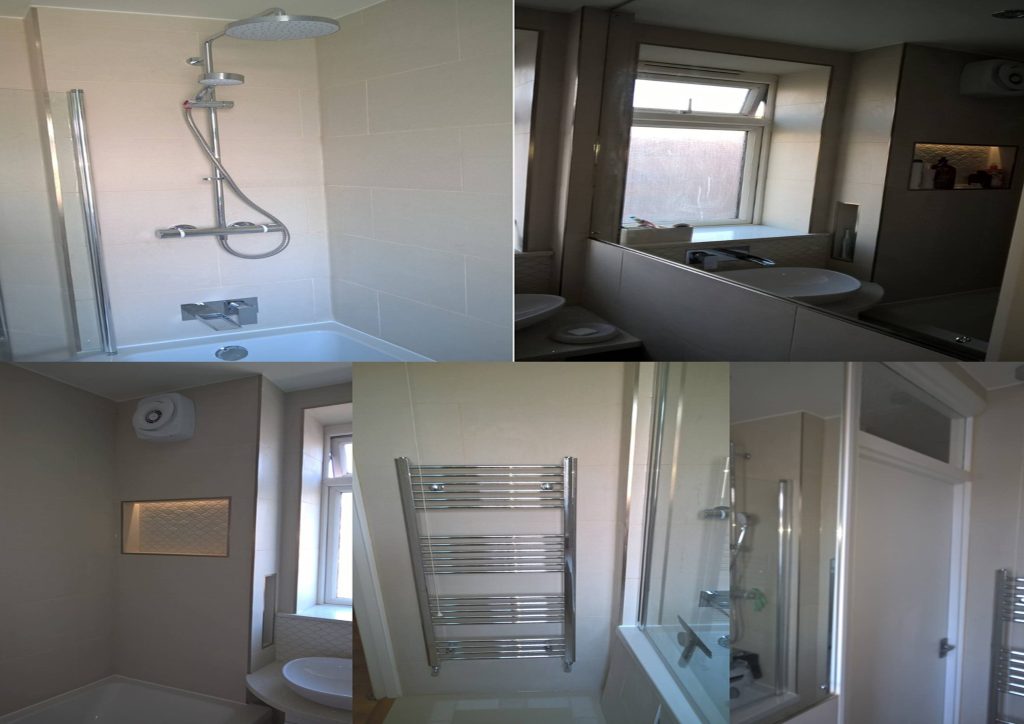
Instead: Install a mirror that spans the width of your wall as this:
- Doubles perceived depth
- Reflects both natural and artificial light
- Removes visual boundaries
In compact bathrooms across Wimbledon and Hampton Wick, this single change often transforms the entire room.
-
Remove Visual Barriers
Every visual interruption makes a room feel tighter.
Avoid:
- Shower curtains
- Heavy frames
- Frosted or segmented glass
Choose:
- Frameless glass screens
- Walk-in showers
The goal is simple: let your eye travel freely across the space.
-
Use Tiles to Create Flow, Not Break It
-
Tiles can either open up a space—or box it in.
Best Strategies:
- Large-format tiles (fewer grout lines)
- Continuous tiling from floor to wall
- Consistent tones throughout
- This creates a seamless look—often called tile drenching—which visually expands the room.
-
Choose Fixtures That Increase Visible Space
It’s not just about size—it’s about what you can see.
Smart upgrades:
- Wall-hung toilets
- Floating vanities
- Slim-profile basins
The more floor you can see, the bigger the room feels. This is especially effective in tighter properties around Esher, where every centimetre matters.
-
Build Storage Into the Room (Not Onto It)
Clutter shrinks space—fast.
Smart storage solutions:
- Recessed shower niches
- Mirror cabinets
- Built-in shelving
- Vertical storage above toilets
Hidden storage = visual calm = more space (psychologically and visually)
-
Optimise Your Layout (Even Small Changes Count)
You don’t always need to move plumbing—but layout still matters massively.
Consider:
- Switching to a corner shower
- Rotating fixtures for better flow
- Replacing a bath with a walk-in shower
In many homes across Kingston upon Thames, layout—not size—is the real limitation.
Walk-In Shower vs Bath: What’s Best for Small Bathrooms?
This is one of the most common questions—and for good reason.
Walk-in shower:
✔ Creates more usable space
✔ Feels modern and open
✔ Improves flow
Keeping a bath:
✔ Better for families
✔ Can help resale value
Expert Insight:
If it’s your only bathroom, think carefully before removing the bath. If you have more than one—go for the walk-in shower.
-
Remove Bulky Features (Yes, Including Radiators)
Traditional radiators take up valuable wall space.
Better Options:
- Underfloor heating
- Slim vertical towel rails
This frees up layout options and makes the room feel less crowded.
-
Keep the Design Cohesive and Calm
Too many colours and materials create visual noise.
Stick to:
- 2–3 complementary tones
- Consistent finishes
- Minimal contrast in small areas
The trend across Hampton Wick and surrounding areas is clear: Small, spa-like bathrooms with a calm, cohesive feel
Common Mistakes That Make Small Bathrooms Feel Smaller
Avoid these:
- Dark tiles across all walls
- Oversized vanities or basins
- Poor lighting (especially shadows)
- No built-in storage
- Too many contrasting materials
These are some of the most common (and costly) renovation mistakes.
Local Insight: Why This Matters in Kingston & Surrounding Areas
Homes in Kingston upon Thames, Wimbledon, and Esher often come with:
- Compact bathroom footprints
- Awkward layouts in older properties
- Limited natural light
That’s why space-enhancing design isn’t a luxury here—it’s essential.
What Does It Cost to Improve a Small Bathroom?
Typical small bathroom renovations in this area:
£3,000 – £6,500
Best ROI upgrades:
- Lighting improvements
- Better layout
- Space-saving fixtures
- Glass shower screens
You don’t need to spend more—you just need to spend smarter. If you’re curious about pricing, we’ve put together a dedicated post that dives into all the details:
https://www.paintersanddecorators.co/bathroom-renovation-costs-in-kingston-upon-thames/
Frequently Asked Questions
Does a large mirror really make a bathroom look bigger?
Yes—large mirrors reflect light and remove visual boundaries, making the room feel significantly more spacious.
What colours make a small bathroom feel bigger?
Light, neutral tones like white, beige, and soft grey work best as they reflect light and reduce visual contrast.
Are wall-hung toilets worth it?
Yes—they free up visible floor space, making the room feel larger and easier to clean.
Is it better to remove a bath in a small bathroom?
It depends. Walk-in showers maximise space, but keeping a bath may help resale value—especially in family homes.
What’s the cheapest way to make a bathroom feel bigger?
- Add a large mirror
- Improve lighting
- Declutter and add storage
- Use lighter colours
These changes can have a big impact without a full renovation.
Final Thought: Small Bathrooms, Done Right, Feel Bigger Than They Are
A small bathroom doesn’t have to feel restrictive. With the right approach, it can feel:
- Spacious
- Functional
- Calm and luxurious
And in homes across Kingston upon Thames, Esher, Hampton Wick, and Wimbledon, that transformation is happening every day—not by adding space, but by designing smarter.
Thinking About Renovating?
If you’re planning to upgrade your bathroom, focusing on space, light, and layout will always deliver the biggest return—both in how your home feels and its long-term value.
By Dave Ferreiro
Founder of DFP Building Services and a bathroom renovation specialist with 18 years of hands-on experience in bathroom design, renovation, and maintenance, serving Kingston upon Thames and Surrey.