



How Much Does a Bathroom Renovation Cost in the UK?19th October, 2026|
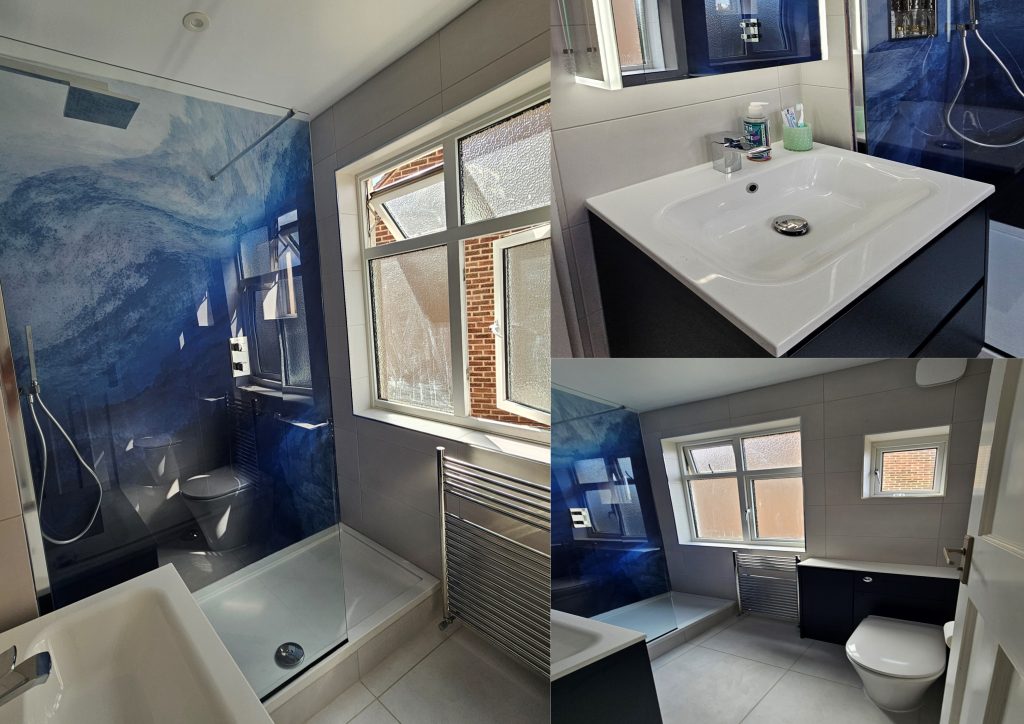
If you’re planning a bathroom renovation, one of your first questions is likely to be: how much will it cost?
The cost of a bathroom renovation in the UK depends on the size of the room, the condition of your existing bathroom, the products and materials you choose, and how much work is needed to install everything. A straightforward replacement bathroom will generally cost less than a complete renovation involving a new layout, plumbing alterations, extensive tiling or repairs to hidden damage.
The best way to budget is to understand what your project involves, what your quotation includes and which costs could arise once work begins.
In this guide, we’ll explain what affects bathroom renovation costs, where your money goes, how to avoid unexpected expenses and how to compare quotations so you can make an informed decision.
How much should you budget for a bathroom renovation?
There isn’t one price that applies to every bathroom. Two rooms of similar size can have very different renovation costs because of their existing condition, the specification of the products and the amount of labour required.
As a starting point, bathroom renovations generally fall into three broad categories:
-
- A cosmetic bathroom refresh: Updating selected fixtures, fittings or finishes while keeping most of the existing layout.
- A like-for-like bathroom replacement: Removing the existing bathroom suite and installing new products in approximately the same positions.
- A complete bathroom renovation: Reworking the room more extensively, potentially including layout changes, new plumbing, electrical work, waterproofing, tiling and repairs.
These categories help you understand the scope of a project, but they aren’t fixed price bands. Actual costs depend on the property, location, labour rates, product choices and work required.
For a reliable budget, request an itemised quotation based on your bathroom and the specification you want. Ask the contractor to explain any provisional allowances, exclusions and assumptions before you agree to proceed.
For a broader understanding of typical home improvement costs, consult the FMB guide to renovation costs.
What affects the cost of a bathroom renovation?
Several factors determine the final price. Understanding them helps explain why quotations can differ considerably, even when contractors appear to be pricing the same room.
- The size and layout of your bathroom
A larger bathroom may require more tiles, flooring, decorating and materials. However, size alone doesn’t determine the cost.
A small bathroom can be relatively expensive to renovate if access is difficult, the layout needs changing or the specification includes premium products. A larger room with a straightforward layout may be easier to complete.
Keeping the toilet, basin, bath and shower in their existing positions can sometimes reduce costs by limiting plumbing alterations. Moving them may require additional pipework, drainage changes and floor or wall repairs.
Before committing to a new layout, ask your installer to explain the cost difference between keeping the existing arrangement and making the proposed changes.
- The condition of your existing bathroom
What lies beneath your existing tiles and flooring can affect the work required.
Once the old bathroom is removed, the installer may discover problems such as:
-
- Leaking pipes or shower connections.
- Damaged plasterboard or wall surfaces.
- Rotten or weakened timber flooring.
- Inadequate waterproofing.
- Poorly installed previous work.
- Ventilation problems contributing to persistent condensation or mould.
Not every renovation uncovers these issues, and their presence shouldn’t be assumed. However, they are worth discussing when planning your budget.
Ask your contractor how unforeseen problems will be documented, priced and approved before additional work proceeds.
- Your choice of bathroom products
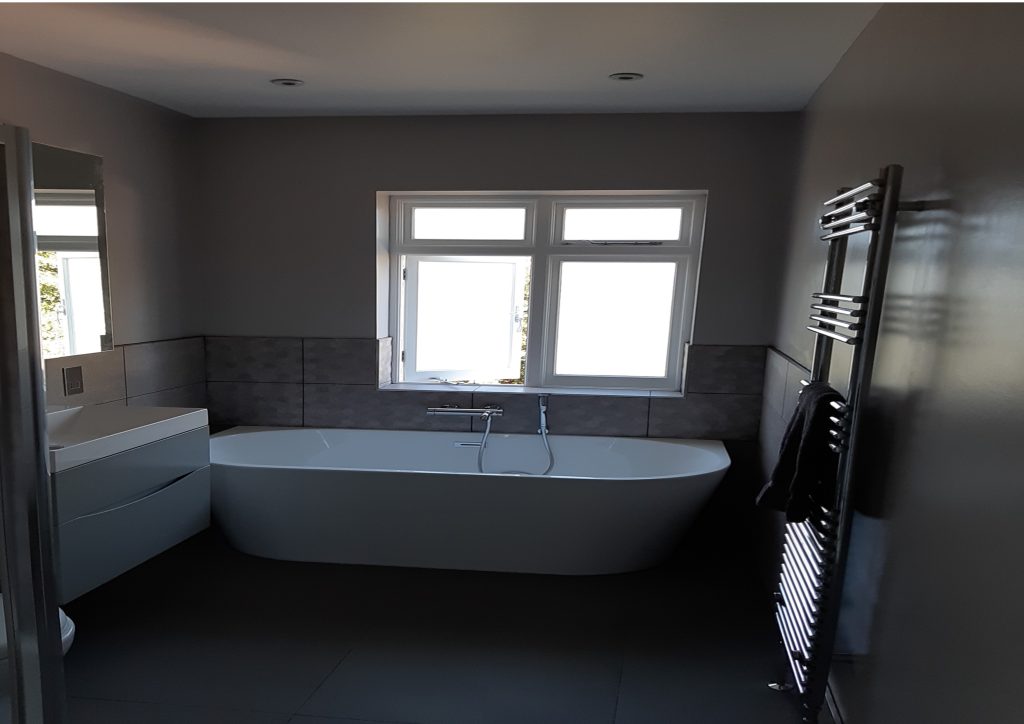
The products you choose affect both the materials budget and, sometimes, the installation cost.
For example, a standard vanity unit may be simpler to install than a bespoke unit requiring alterations to walls, pipework or storage arrangements. A specialist shower system may require different plumbing or electrical work from a straightforward replacement.
Consider the cost of:
-
- Baths and shower trays
- Shower enclosures and screens
- Toilets and cisterns
- Basins and vanity units
- Taps and shower fittings
- Bathroom furniture and storage
- Mirrors and lighting
- Heated towel rails and radiators
- Tiles, grout and finishing materials
You don’t necessarily need the most expensive products to achieve a high-quality result. Prioritise the items that matter most to you, then compare alternatives for durability, maintenance, appearance and installation requirements.
- Tiling, flooring and wall finishes

The amount of tiling and the complexity of the design can make a significant difference to the overall cost.
Tiling a small splashback is a different undertaking from tiling every wall and the floor. More intricate layouts, decorative patterns, specialist finishes and detailed cuts can increase labour requirements.
Other options, such as suitable bathroom wall panels, may reduce the amount of traditional tiling required. However, suitability depends on the room, installation system, substrate and manufacturer’s instructions.
When comparing quotations, check whether they include surface preparation, tile adhesive, grout, trims, sealing and any necessary waterproofing. Also clarify who is responsible for supplying the tiles and how wastage is calculated.
Read our guide to Materials & Product Selection: Choosing the Right Fixtures, Tiles, and Finishes for a Beautiful, Long-Lasting Bathroom for expert tips on selecting quality materials and products that balance style, durability and practicality.
- Plumbing and electrical work
Keeping existing fixtures in the same positions may simplify a project, but the existing services still need to be assessed.
Moving a toilet, bath or shower can involve additional plumbing and drainage work. Changes to lighting, extractor fans, heated towel rails or electric showers may also require electrical alterations.
The extent of the work depends on the existing installation and the proposed design.
Ask your contractor to explain which plumbing and electrical tasks are included in the quotation, who will carry them out and whether any testing, certification or building control requirements apply.
For more information about electrical safety requirements in bathrooms, see the UK Government’s guidance on electrical safety in dwellings.
- Labour, access and project complexity
Labour is a major part of many bathroom renovation projects. The number of trades involved, the time needed on site and the complexity of coordinating the work all affect the cost.
Access can also matter. Carrying materials through narrow staircases, working in a flat with restricted access or removing waste from a property with limited parking may create additional practical challenges.
A detailed quotation should explain the work being undertaken rather than simply giving you one unexplained total.
What is included in a bathroom renovation quotation?
A comprehensive quotation should make it clear what the contractor will do, which products are included and what remains your responsibility.
Depending on the scope of the project, the quotation may cover:
-
- Removing the existing bathroom suite
- Disposal of old fixtures, fittings and construction waste
- Preparing walls and floors
- Plumbing alterations and new connections
- Electrical work and ventilation
- Installing the bath, shower, toilet and basin
- Waterproofing where required by the installation
- Tiling, grouting and finishing
- Flooring and decorating
- Testing, commissioning and final checks
Not every quotation will include all these items. Some contractors quote for labour only, while others include specified materials and products. Decorating, waste removal, repairs, product delivery and other tasks may be priced separately.
Before accepting a quotation, ask for written confirmation of:
-
- The work included in the agreed price
- The products and materials supplied
- Any exclusions or provisional sums
- Who is responsible for ordering and checking deliveries
- How unforeseen repairs and changes will be priced
- The payment schedule and anticipated completion period
- The arrangements for defects, snagging and aftercare
The more clearly the scope is defined, the easier it is to compare quotations fairly.
What hidden costs should you budget for?
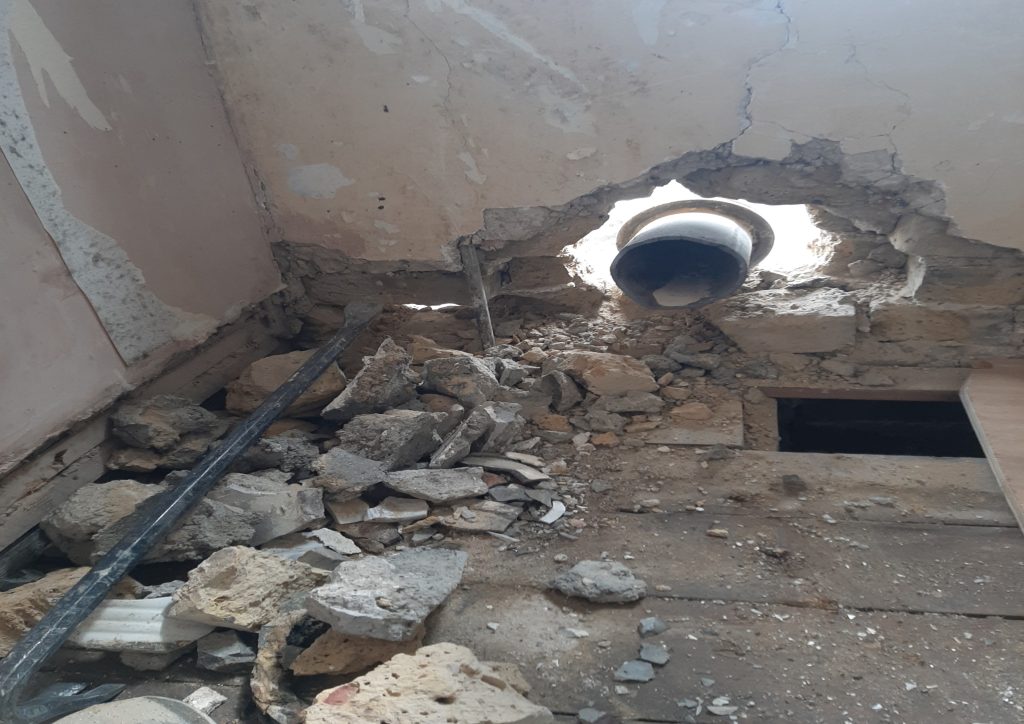
Unexpected costs can arise when existing fixtures are removed and the underlying structure or services become visible.
The most useful approach is to distinguish between known costs, foreseeable risks and genuinely unforeseen work.
Potential additional costs include:
-
- Repairing damaged flooring or wall substrates
- Replacing defective pipework
- Correcting previous installation problems
- Making additional electrical or plumbing alterations
- Upgrading ventilation where necessary
- Replacing unsuitable materials discovered during removal
- Changes requested after work has started
- Additional products, finishes or decorative details not included in the original specification
You may not need to pay for any of these. The point is to understand which risks are relevant to your property and how they would be handled if discovered.
Ask your contractor whether a contingency allowance would be sensible for your particular project. Agree how any additional work must be documented and authorised before it is carried out.
A clear process helps you maintain control of your budget rather than being surprised by unexplained additions to the final bill.
Is it cheaper to keep your existing bathroom layout?
It can be.
Keeping the bath, toilet, basin and shower in approximately the same positions may reduce the amount of plumbing, drainage work and making good required. This can make a like-for-like replacement more straightforward than a renovation involving substantial layout changes.
However, keeping the existing layout isn’t always the best decision.
If your current bathroom is awkward to use, lacks storage or has a poorly positioned shower, changing the layout could improve its functionality considerably.
Ask your installer to price both options where practical:
-
- Option A: replace the existing fixtures while keeping the layout.
- Option B: change the layout to improve usability or appearance.
Comparing the two can help you decide whether the extra cost delivers enough benefit for your household.
Where can you save money on a bathroom renovation?
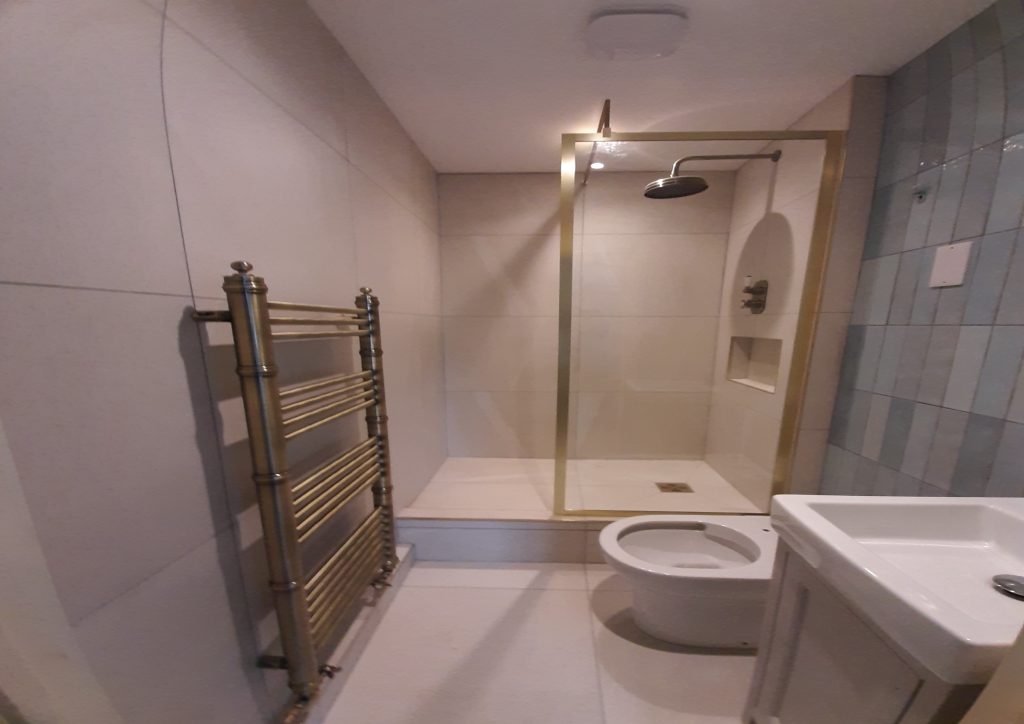
You can often control costs by making informed decisions before installation begins.
Keep the layout where practical
Avoid unnecessary plumbing and drainage alterations if the existing arrangement works well for you.
Prioritise your spending
Decide which products and features matter most. You may prefer to invest in a better shower system or durable flooring while choosing more economical options elsewhere.
Read more: Discover how carefully chosen accessories and luxury finishing touches can elevate your bathroom in our guide to Fixtures, Features & Luxury Add-Ons — Creating a Hotel-Quality Bathroom Retreat.
Finalise your specification early
Changing tiles, taps, fixtures or the layout after work has started can create additional labour, delivery costs and delays.
Compare equivalent quotations
A lower quotation isn’t necessarily better value if it excludes important work, uses different product allowances or leaves out waste removal and finishing.
Ask about alternatives
A good contractor should be able to explain the advantages, disadvantages and costs of alternative products or installation approaches without assuming that the most expensive option is always the best.
Why do bathroom renovation quotations vary so much?
If you’ve received two or three quotations, you may be surprised by the differences a bathroom costs in the uk.
Before deciding that one contractor is overpriced, check whether the quotations cover the same scope of work.
One quotation might include removal, waste disposal, plumbing alterations, specified products, waterproofing, tiling and decorating. Another might cover installation labour only.
Other differences may relate to the contractor’s labour costs, project management, product specification, warranty arrangements and the amount of preparation included.
Ask each contractor to clarify:
-
- What work is included and excluded?
- Which products are specified?
- Are the materials allowances realistic for your choices?
- What preparation and finishing work is covered?
- How are unforeseen problems handled?
- Who coordinates the different trades?
- What aftercare and defect arrangements apply?
The aim isn’t simply to find the lowest price. It’s to understand what you’re buying and choose a contractor whose quotation, workmanship and approach meet your needs.
Should you renovate your bathroom or replace selected items?
A complete renovation isn’t always necessary.
If your bathroom is structurally sound, the plumbing works properly and the layout suits your household, replacing selected items or updating finishes may be sufficient.
For example, you might consider replacing an outdated vanity unit, upgrading taps, installing a new shower screen or refreshing the room’s appearance.
A full renovation may be more appropriate if there are underlying problems, the layout no longer works, the installation needs substantial repairs or you want to change the room more comprehensively.
Compare the cost and expected benefits of both approaches. Consider not only the immediate price but also the condition of the existing bathroom and the likelihood that retaining older components will require further work later.
How do you get an accurate bathroom renovation quotation?
The more information you can provide at the quotation stage, the easier it is for a contractor to assess the work.
Before requesting quotations, try to establish:
-
- Whether you want a cosmetic update or a complete renovation.
- Which fixtures and fittings you intend to replace.
- Whether you want to change the layout.
- Your preferred products, tiles and finishes, if known.
- Any existing leaks, damp problems or other concerns.
- Any practical requirements, such as accessibility or limited access to the property.
A site visit may be necessary to assess the existing room, measure accurately and discuss the proposed work.
Ask for an itemised quotation and make sure you understand the terms before agreeing to proceed. If you are comparing several contractors, give them as similar a specification as possible so that the quotations are more meaningful.
Frequently asked questions about bathroom renovation costs
How much does a small bathroom renovation cost?
The cost depends on the scope of the work, the products selected, the room’s condition and local labour rates. A small bathroom isn’t automatically inexpensive to renovate, particularly if access is difficult or the plumbing and layout need changing. Request a quotation based on the actual work required.
Is a bathroom renovation more expensive if I move the toilet?
It can be. Moving a toilet may involve changes to the water supply, soil pipe, drainage route, flooring and surrounding finishes. The additional cost depends on the existing pipework, the new position and the practical constraints of the property.
Does a bathroom renovation quotation include materials?
Not always. Some quotations include specified products and installation materials, while others cover labour only or use allowances for products you have yet to select. Check the written quotation carefully before comparing prices.
How much extra should I budget for unexpected costs?
There is no single contingency amount that suits every project. The appropriate allowance depends on the age and condition of the property, what can be inspected before work begins and the extent of the planned renovation. Ask your contractor which risks are foreseeable and what contingency would be sensible.
Is it cheaper to buy my own bathroom suite?
It can be, depending on the products, supplier prices, delivery arrangements and installation requirements. However, you should also consider who checks compatibility, coordinates deliveries, handles damaged goods and deals with missing components. Agree responsibilities with your installer before purchasing anything.
Does a new bathroom add value to a property?
A well-designed, functional bathroom can make a property more appealing to prospective buyers, but the effect on its sale price isn’t guaranteed. It depends on the property, the local market, the quality of the renovation and the expectations of potential buyers. Avoid assuming that the cost of a renovation will automatically be recovered when you sell.
How can I tell whether a bathroom renovation quote is fair?
Compare quotations for equivalent work, materials, preparation, finishing, waste disposal, payment terms and aftercare. Ask contractors to explain significant differences rather than judging the price alone. Check their experience, relevant qualifications, insurance and references as appropriate to the work.
Planning a bathroom renovation? Start with a clear quotation.
The cost of a bathroom renovation depends on much more than the size of the room or the price of the products you choose.
The existing condition of your bathroom, the installation work required, the layout, the specification and the clarity of the quotation all affect the final cost.
Understanding these factors before work begins helps you set a realistic budget, compare contractors fairly and make decisions that suit your home.
The next step is to discuss your bathroom, your priorities and the work you have in mind with an experienced renovation professional. A properly scoped quotation will give you a clearer understanding of the likely cost, what’s included and which decisions need to be made before the project starts.
By Dave Ferreiro
Founder of DFP Building Services and a bathroom renovation specialist with 18 years of hands-on experience in bathroom design, renovation, and maintenance, serving Kingston upon Thames and Surrey.